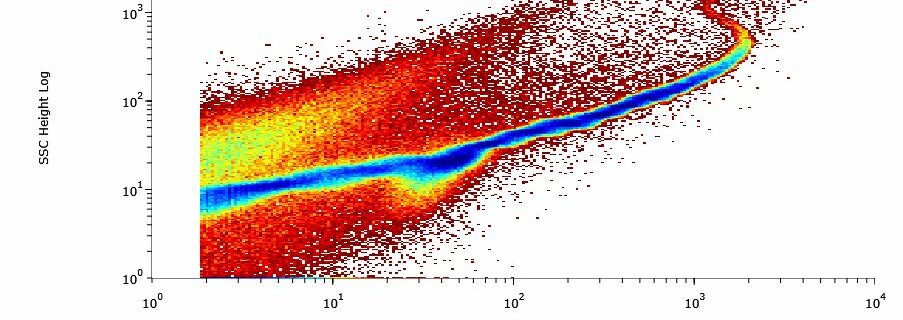




This workshop will allow to analyse single cells from mixed or homogenous prokaryotic or eukaryotic samples for their size, diffraction multi-fluorescences and distribution of the population with proper statistics. Participants will learn theoretical and practical aspects of flow cytometry.
The Plinius Cursus offers the “Flow cytometry” workshop which will allow to understand the possibilities to analyse cells at single level in order to estimate the distribution of a population with its accurate statistics for the different parameters observed. This will also allow to sort physically the cells on different samples based on chosen characteristics (size, fluorescence etc.).
At the end of the workshop, attendees will be able to understand the multiple possibilities given by the analysis and sorting samples by flow cytometry. Attendees will know how to design an experiment, how to prepare and to run samples, the gating strategy, to handle the statistics and data during experiments or in a post-acquisition step with specific softwares. Attendees will get a better idea of the diversity of projects and measurements using a flow cytometer and also its limitations.
Timeline
Students prerequisites
Location
Campus J. Aiguier, Bat N, ground floor, Room N025A.
Labo impliqué dans la formation. LCB, team IAM.
Wednesday 10th, June 2026 09:00
Campus Joseph Aiguier, Marseille
